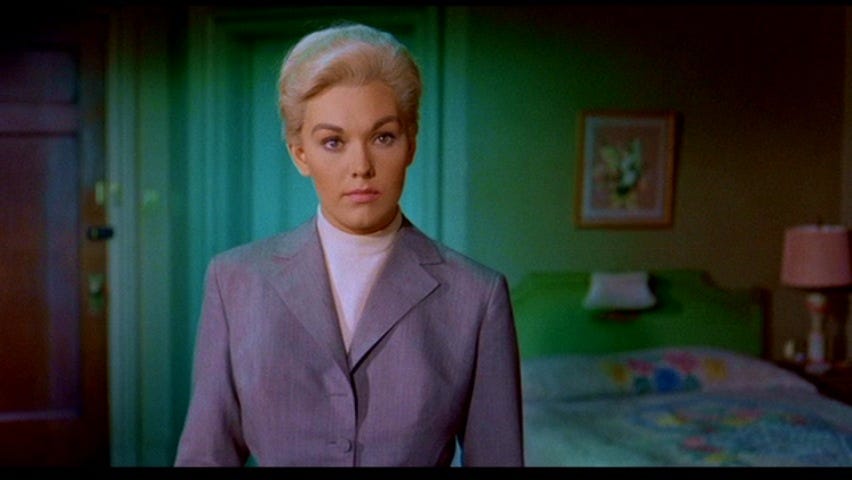
Color Psychology in Vertigo: The Green Ghost
In "Vertigo" (1958), color transcends mere aesthetic choice to become a powerful narrative tool. Among the film's carefully orchestrated color palette, none carries more symbolic weight than the haunting green that surrounds Madeleine/Judy throughout the film. This ethereal green glow, which has come to be known as "Vertigo green," serves as a visual representation of obsession, death, and rebirth, while creating an otherworldly atmosphere that blurs the line between the natural and supernatural.
The Genesis of Vertigo Green
Working with cinematographer Robert Burks and costume designer Edith Head, Hitchcock crafted a color scheme that would enhance the film's psychological complexity. The signature green that appears throughout the film was achieved through careful manipulation of lighting and film processing, creating a distinctive hue that seems to hover between reality and dream.
This green first appears in association with Madeleine's car, a cool, metallic Jaguar that Scottie follows through San Francisco's streets. The color choice immediately sets Madeleine apart from the warm, earthbound tones of the city, suggesting something alien and unreachable about her character. This otherworldly quality is reinforced by the green's association with the supernatural elements of the story, particularly the ghost of Carlotta Valdes that supposedly possesses Madeleine.
The Forest Sequence: Nature's Green Transformed
When Scottie follows Madeleine to Muir Woods, the natural green of the forest takes on an uncanny quality. Hitchcock manipulates the typically comforting colors of nature to create an environment that feels simultaneously primordial and artificial. The towering redwoods, bathed in a strange green light, become almost mystical, reflecting Madeleine's connection to the past and her apparent obsession with death. This scene transforms the life-affirming green of nature into something ancient and slightly menacing.
The Hotel Empire: The Neon Revelation
Perhaps the most iconic use of green in "Vertigo" comes during the scene at the Hotel Empire, where Judy is bathed in the ghostly green light of the hotel's neon sign. This moment serves as a visual bridge between Judy's real identity and her performance as Madeleine. The artificial green light literally transforms her before our eyes, making explicit the connection between her two identities while suggesting something artificial and constructed about both.
This scene is particularly brilliant because it uses the mundane reality of a neon sign to create an almost supernatural effect. The green light penetrating Judy's room serves as both a practical light source and a powerful symbol of how the ghost of Madeleine continues to haunt both her and Scottie. It's a perfect marriage of realism and expressionism that exemplifies Hitchcock's masterful approach to visual storytelling.
The Gallery Scene: Art and Artifice
In the art gallery scene, where Madeleine sits contemplating Carlotta's portrait, Hitchcock uses color to create subtle connections between past and present. The green tones in the gallery's walls and lighting create a similar ghostly atmosphere to that which surrounds Madeleine, suggesting her connection to Carlotta while also highlighting the artificial nature of this constructed scene. The color serves to blend reality and performance, just as Judy's performance as Madeleine blends truth and fiction.
Resurrection and Transformation
As Scottie attempts to transform Judy back into Madeleine, the green motif takes on new significance. The color becomes associated with the process of resurrection itself, suggesting both decay and renewal. This dual nature of green – its association with both life and death – perfectly captures the film's themes of obsession and transformation. When Judy finally emerges fully transformed back into Madeleine, the green lighting suggests both triumph and tragedy, creation and destruction.
Technical Achievement and Artistic Impact
The creation of "Vertigo green" represented a significant technical achievement in color filmmaking. Hitchcock and his team had to carefully calibrate their use of lighting and film processing to achieve the specific shade they wanted. The result was so distinctive that it influenced future filmmakers' approach to color in cinema. The term "Vertigo green" has become part of the filmmaker's vocabulary, referring to any use of green lighting to create an atmosphere of mystery or unreality.
Color Psychology and Modern Cinema
"Vertigo's" sophisticated use of color psychology set new standards for how color could be used in film to convey psychological states and thematic content. Modern filmmakers continue to study and draw inspiration from Hitchcock's techniques, particularly his ability to use color not just as decoration but as an integral part of the storytelling process.
The green ghost that haunts "Vertigo" represents one of cinema's most sophisticated uses of color symbolism. It serves simultaneously as a practical element of the film's visual design and as a complex symbol carrying multiple layers of meaning. Through this careful use of color, Hitchcock created not just a ghost story or a thriller, but a rich psychological study where every visual element contributes to the film's exploration of obsession, identity, and the thin line between reality and illusion. The film's green motif remains one of the most influential examples of how color can be used in cinema to create meaning beyond words.